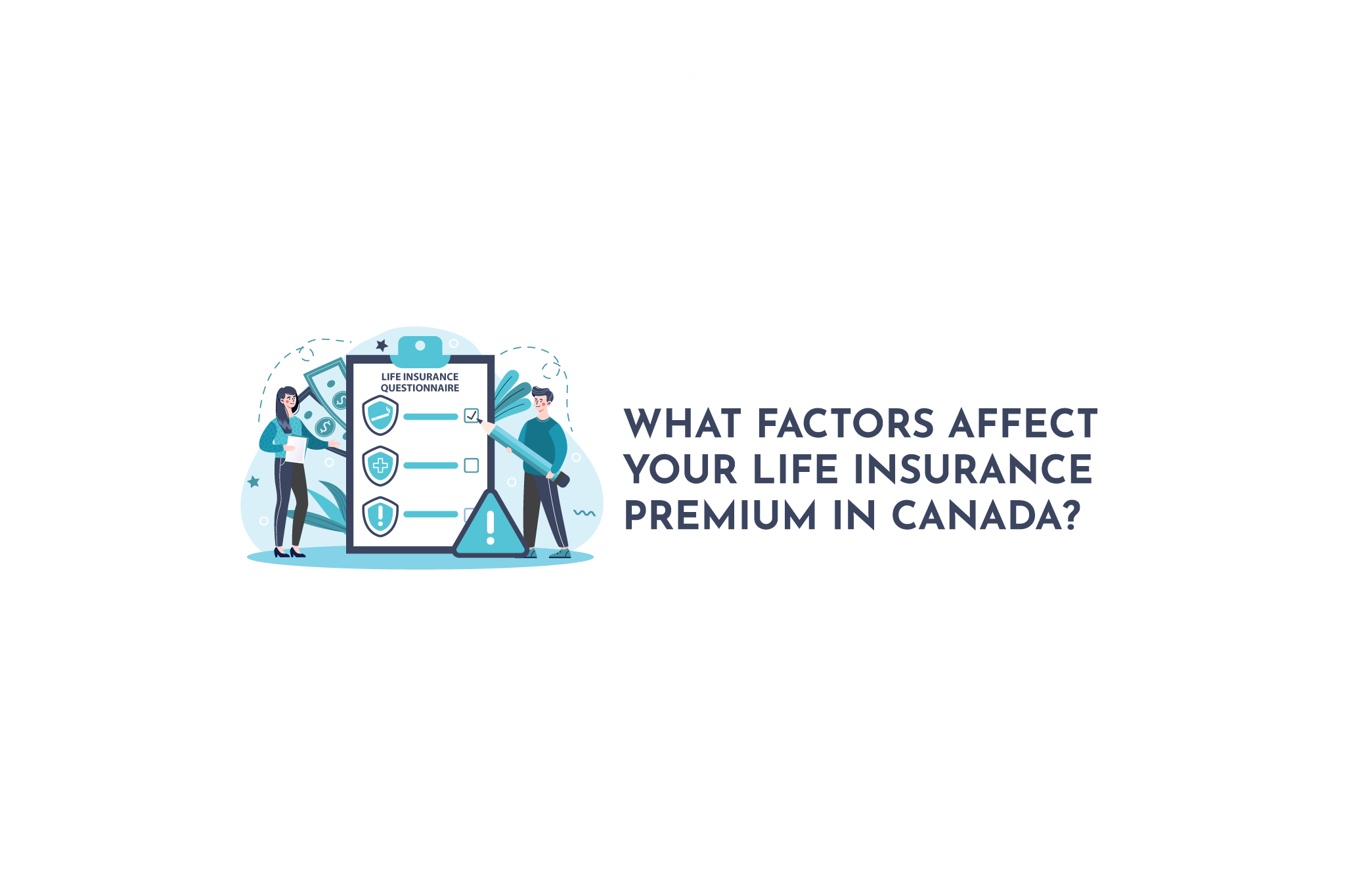

If you’ve looked into life insurance in Canada, you understand that there are many different factors that play a role in how much the premium that you need to pay for your coverage will be. Many of the things that influence the premium, like your biological sex, how old you are, and your family health history, are beyond your control. Underwriters at an insurance company combine these uncontrollable factors with more controllable criteria to determine the premium you will pay for your policy. Since some application factors are within your control, I thought it might be worthwhile to review the controllable factors that affect your life insurance premium and what you can do to get the best rate possible.
In This Article:
- Do You Use Nicotine and Tobacco Products?
- Use of Alcohol and Recreational Drugs
- Your Personal Health Situation
- You Like to Live Dangerously
- The Bottom Line

Do You Use Nicotine and Tobacco Products?
The Issue: The use of tobacco and nicotine is one of the biggest contributing factors to higher life insurance premiums. Depending on your age and the type of policy that you are applying for, you can see a ‘smoker rate’ applied to someone who uses nicotine or tobacco products that is between fifty and one hundred percent higher than a ‘non-smoker’. These smoker rates apply if you have used any nicotine or tobacco products in the 12 months before applying for the policy. Note that the question isn’t about smoking cigarettes. If you have used chewing tobacco, smoked cigars, used a nicotine patch or nicotine gum, or used a vape that has nicotine in it, you must answer yes to the question about nicotine or tobacco use. Remember as well, underwriting isn’t only looking for nicotine in your system to confirm if you are a smoker. They test for a chemical your body makes when nicotine is broken down, called cotinine. If they see cotinine in your system, they know that you are a nicotine user, even if there is no nicotine present in your body at the time of testing.
The Side Track: Cannabis use was always an unusual one when it came to ‘smoker’ ratings for policies. With cannabis now being legalized, whether or not you pay smoker rates for using cannabis products depends on the way that you consume it. While you may be considered a smoker if your chosen method of use for cannabis is smoking it, if you can change to another method of using, such as edibles, you may not face the same smoker classification from an insurer. As long as you aren’t using cannabis from a ‘combustible’ method (i.e., smoking it), you can receive non-smoker rates from some insurance companies.
The Solution: This is a very black-and-white area. You need to stop using tobacco and nicotine products for a period of 12 months. Once you have achieved that length of time without using nicotine or tobacco products, you can apply to your insurer to have your premium reduced to the non-smoker rate. Note, though, that the decision to quit using nicotine or tobacco products needs to be a choice you make, not something that is mandated by a doctor related to another health problem. For example, if you have a cardiac event and you quit smoking cigarettes on the advice of your doctor, you won’t get the rate reduction to non-smoker rates because the decision to quit was accompanied by a significant change in your health.
Use of Alcohol and Recreational Drugs
The Issue: Regular use of alcohol and/or recreational drugs increases your mortality risks. There will be questions about how often you use these substances, how much you use them, and if you have ever had any issues related to their use. These issues could be problems with an organ like your liver, or being charged with a DUI. In any case, if you regularly overindulge in alcohol or recreational drugs, an insurer can apply an extra premium or even flat-out decline to offer you the coverage.
The Solution: Focusing on moderation is key. When you overuse alcohol, your bloodwork may show alcohol-related liver enzymes in the results. If you can reduce the amount of alcohol that you consume and maintain the lowered use level for a period of 3 to 6 months, this is often a good way to have these markers return to normal levels in blood work. Outside of cannabis, you may find other recreational drug use to be more of an issue. Many insurers won’t consider applications for recreational drug users at all if the use has been recent, while use in the past (usually three to six years ago) won’t qualify you for standard rates. This means that if you have used recreational drugs in the past, you need to abstain from their use for at least 6 years before many insurers would consider your application with standard rates.

Your Personal Health Situation
When you are looking at things that are ongoing with your personal health circumstances, there are a few common things that can result in insurers asking for extra premiums.
The Issue: You have a chronic health condition like high blood pressure or high cholesterol. Underwriters really want to see a history that shows that it is under control and there is a pattern of stability.
The Solution: These types of chronic conditions are often controllable with medications, so making sure that you use the medicines prescribed to you and that you have a strong history of control will help you qualify for the best rates possible.
The Issue: Your height-to-weight ratio is not ideal. Insurers have something we used to refer to as a ‘build table’. This is a guideline that was used to compare an applicant’s height and weight to make sure that their BMI didn’t put them into risk zones associated with being overweight. While I haven’t heard about the ‘table’ for a while, your height-to-weight ratio is still definitely a factor that insurers monitor and can ask for an extra premium if your ratio exceeds their guidelines.
The Solution: If you are actively working to lose weight and have had success, you are able to apply for re-underwriting once a set period of time has passed. For example, you may be told initially with your policy that if you lose 25 pounds and maintain that weight loss for a period of 12 months, then you can apply for rate reductions. The reason for the time frame being laid out is that you need to demonstrate that there won’t be the yo-yo effect that people often experience with weight loss.
You Like to Live Dangerously
There are often hobbies that an insurer will ask about, and if you participate in them, you can see your policy modified to account for the extra risk.
The Issue: You like to participate in sports like scuba diving or heliskiing. Or perhaps you are a pilot who participates in private aviation (i.e., you fly a small plane that is privately owned).
The Solution: Depending on the frequency with which you participate in the hazardous activity, you may want to consider asking the insurer to issue a policy with an exclusion rather than extra premium amounts being applied. An exclusion means that if you die as a result of a specific activity, the policy doesn’t pay out. As an example, I had a client years ago who was required to answer yes to the skydiving question on a life insurance application because he had participated in the sport within the two years leading up to his application. He requested an exclusion from dying while skydiving because it was a ‘bucket list’ thing he wanted to try; he had done it once and never planned on doing it again. So rather than pay more for the coverage, he was better off with standard premiums for a policy that wouldn’t pay out the death benefit if he died jumping from a plane for sport (which he never plans on doing again anyways).
The Bottom Line
As mentioned at the very beginning of this article, things like your genetic history and age are factors that are outside of your control. The role that these factors play in your life insurance rates is largely based on the decisions of the insurers. As we also discussed here, though, there are many factors that play a role in determining the amount of life insurance premium that you would pay that are within your control. If you make choices to do things like quit smoking, reduce alcohol consumption, lose weight, or give up skydiving, you may be able to reduce the premium that you are paying for life insurance. To find out what the best pathway forward for you is, reach out to the team at Strata Wealth & Risk Management and have them guide you. A simple conversation could result in substantial long-term savings for you and your family.