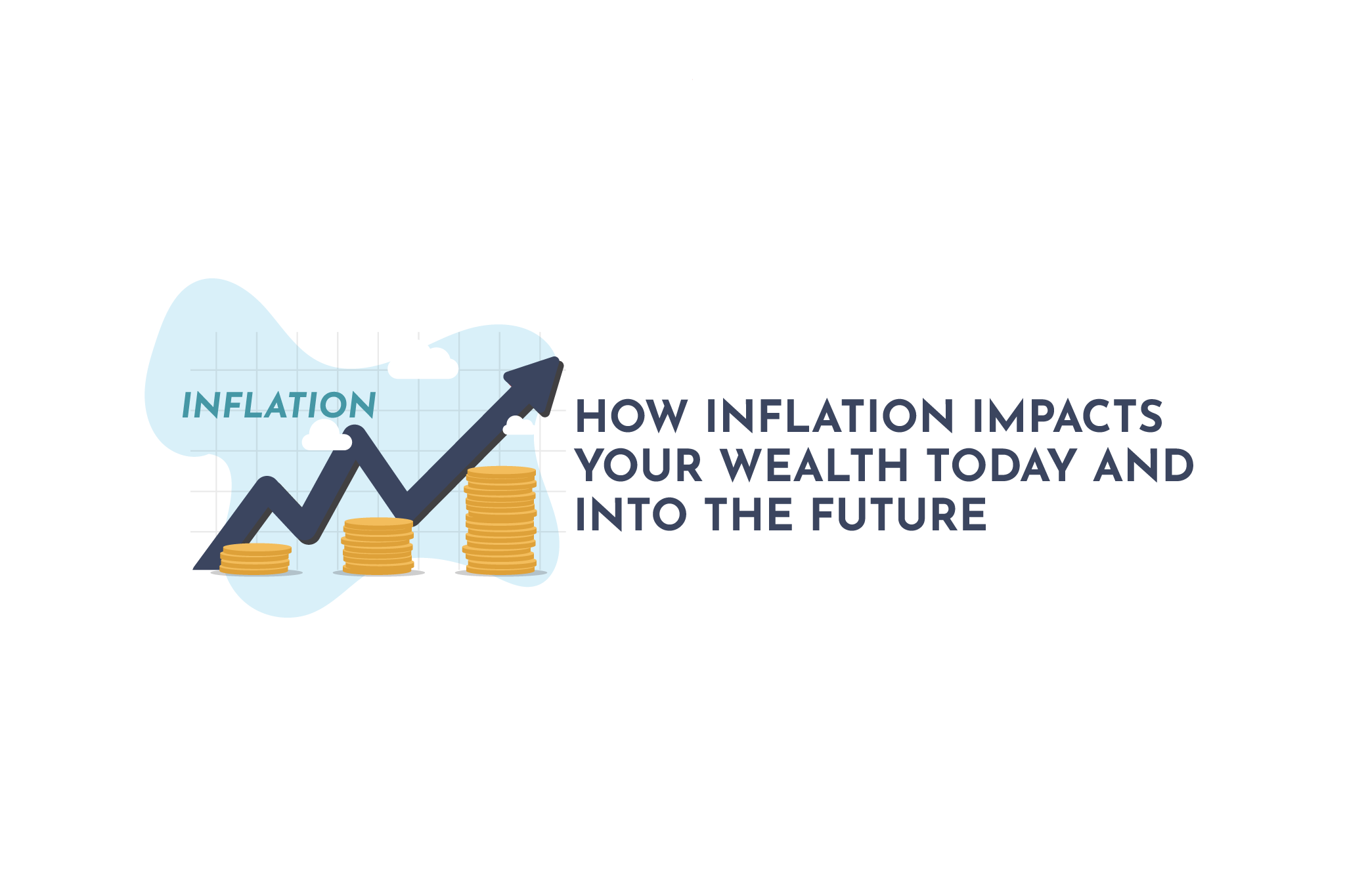

As I write this, we are living in a period of rapidly changing factors globally that are all adding up to making things less affordable for Canadians and our everyday lives. Inflation has reared up over the past few years as the invisible tax that simply makes things more expensive. Most Canadians think that we pay a lot (or too much) tax in our daily lives to begin with, but at least when I pay my taxes I get something to show for it, like health care. Inflation has driven prices up, and the only thing that I get to show for that is more stress and fewer groceries for my money. In April of 2026, the CPI increased 2.8% over 12 months. While this is still lower than the peaks we saw a few years ago, we are faced every day with the fact that our money simply doesn’t have the purchasing power that it did in the past, and it is the everyday essentials that are costing us more based largely on the highly volatile world energy market (and the super high prices at the pump that come with that). With this in mind, I thought that people may be asking themselves, ‘What effect does inflation have on my financial plan?’ To help with this, it seemed worthwhile to provide some answers on how inflation is impacting your wealth today and what impact it might have on you in the future as well.
In This Article
The Impact on Your Wealth Today
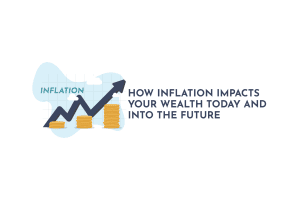
One thing that you need to understand is that inflation is not a temporary thing. Inflation is defined as a sustained increase in the price level of goods and services. You also need to understand that when the inflation rate goes down, that means that the rate at which costs are going up is decreasing, but the costs are still going up. It isn’t until the inflation rate goes negative (called deflation) that you may actually see prices decreasing. This is a key thing to understand because you need to know that the purchasing power of your money is basically decreasing by the inflation rate every year. $100 today doesn’t buy you what $100 did a year ago, but it will buy you more than $100 will be able to a year from now. How does this impact your wealth today?
- Safe investment strategies are less attractive. If you hold your investments in safe, interest-paying investments like GICs, you need to understand that inflation is actively working against the purchasing power of your savings. Remember when I said that the inflation rate was 2.8%? That means that if your savings didn’t earn at least that much as a rate of return, then you actually lost purchasing power even though you have more money than you started with. Think of this the next time you are looking at GICs. If you can get a 3% interest rate on a GIC but Inflation is 2.8%, you basically broke even over the term of the investment.
- The value of your real estate holdings. When you look at the wealth of Canadians, a large portion of their net worth is tied to the value of their homes. Right now we are seeing challenges with the growth of this wealth because we are seeing flattening, or even decreasing, real estate values across many portions of the country. For many years, a key part of many Canadians’ financial plans was the idea of ‘downsizing’ as they entered into retirement. This was a plan where they would sell their home, making the gains that built up in its value over the years real, and then purchase a smaller home and use the excess money from that transaction to supplement their retirement income. Inflation is impacting your real estate values because it is becoming increasingly difficult for new homeowners to enter the market, and without this new money entering the system, values are stagnating.

The Impact on Your Future Plans
This is where inflation can have a really significant impact on things. When you are building your financial plan, we typically plan everything in today’s dollars and then apply inflation to that amount. This allows you to use your current household expenditures in your plan, eliminating some of the guesswork about what it actually costs you to live. The downside to this is that if you miss on your inflation estimate, you can end up with not having enough money, or having too much money saved to meet your needs in the future. Both outcomes have different implications for you. Let’s look at how.
- During your accumulation phase – If you have an amount in today’s dollars that you feel like you need to live on in the future, you apply an inflation rate to that calculation so that you know how much you will need to have saved in real dollars 20, 30, or more years into the future. There’s an interesting inflation calculator here that you can play with to see what impact the chosen rate has over many years. For example, if it costs you $50,000 a year to live today and you estimate that inflation will be 3% for thirty years, you need $121,363 to pay for the same amount of things that $50,000 gets you today. If we change that to 2.9% inflation, the future value of the $50,000 is now $117,877, a difference of $3,486 from a 0.1% change in the inflation rate. This means that you’re better off overestimating what inflation will be than underestimating it in your retirement plans. This is because if you overestimate the inflation rate, you would have a surplus of funds while an underestimation results in a shortfall. Remember, with inflation as a factor, you can’t simply have a set target for saving. For example, if you decide that you need $1,000,000 to retire in 20 years, you need to account for inflation because at 3% inflation you actually need $1,806,111 in savings for the same purchasing power of $1,000,000 today.
- During your decumulation phase – This is when you are spending your savings. If you’ve never heard the term ‘safe withdrawal rate’ before, it is something that you should explore. The safe withdrawal rate is an amount that is calculated that tells you how much you can withdraw from your savings every year, adjusted for inflation, to have a 90% probability of still having money left in your savings after 30 years. It is a moving target because things like inflation change all the time, but in 2025 Morningstar suggested that 3.9% was a safe withdrawal rate from your savings. That means that if you had $1,000,000 in savings, you could take $39,000 out annually and typically not exhaust your savings before 30 years pass.
This is where you need to remember something very important about your retirement plan: It isn’t a plan that ends the day you retire. Your retirement plan is part of your overall financial plan, and it lasts until the day you die. Even in retirement, you will need to have a sound investment plan that will allow your investments to grow every year even as you draw income out of them. If you recall, very early on in this discussion I highlighted that you need to exceed the inflation rate with your investment returns to see actual growth in your purchasing power. This is essential in the decumulation phase of your investing life. Don’t become overly conservative and watch inflation erode the purchasing power of your investments.
How to Protect Your Future
The bottom line is that inflation is going to be a factor in your overall financial plan for the rest of your life. There’s simply no way to avoid it. This means you need to focus on growth that outpaces inflation so you aren’t losing the purchasing power of your dollars over the years you are saving. Key ways to do this are:
- Take full advantage of tax-sheltered and tax-deferred options – Make sure that you are taking full advantage of the TFSA and RRSP options to shield your investment growth from taxation annually. By not having taxes grind down your investment growth each year, the compounding of your investments is larger and allows you a better chance to outpace inflation.
- Don’t forget about growth in your portfolio – You should always make sure to include at least a portion of your portfolio in equity investments. Historically, stocks outpace inflation over the long term, in large part due to the fact that the companies you are investing in can raise their prices to combat rising costs.
The biggest key to protecting your future comes down to a message that we repeat many times in our articles. Make sure that you have a financial plan. If you have one, now is the best time to test it against inflation and see how it holds up to the new, higher rates we’ve experienced lately. If you don’t have a financial plan in place, take the time to make one. Reach out to the experts at Strata Wealth & Risk Management to help you start to build a plan today that will help guide you into the future with the knowledge that you’re on the right path.